Name
Zeitraum
Dauer
Ort
Preis

Perhaps you are familiar with this scenario: An employee thinks they know everything, blocks every decision, or reacts emotionally to criticism. Conversations go in circles, team morale plummets, and you wonder: How can I change this?
This is precisely where our seminar "Communication Skills in Challenging Situations" comes in. Instead of feeling helpless, you'll gain confidence, methodology and a professional approach, enabling you to transform difficult situations into moments of masterful control. Learn how to lead challenging employees professionally, defuse conflicts effectively and guide conversations with confidence: for greater calm, clarity, and impact in your leadership role.
✅ You will learn how to lead difficult employees with confidence and clarity
Managing difficult employees is a core competency of Leadership Behaviour. In our seminar Dealing with difficult employees & customers, you will develop a clear and structured approach to handling challenging team members, systematically guiding low performers, and distinguishing between performance deficits, motivational issues, and signs of disengagement.
✅ You will gain confidence in feedback, conflict, and performance review conversations
Whether conducting a feedback discussion, a conflict resolution meeting, or a formal performance appraisal, you will learn how to prepare conversations strategically, lead them with focus, and document outcomes in a legally sound manner. This enables you to act in line with clear escalation stages while maintaining leadership authority in demanding situations. For further development, we also recommend our seminar The Employee Appraisal.
✅ You will operate confidently within the legal framework of employment law
From formal warnings and duty of care obligations to termination procedures or BEM (Company Integration Management), you will gain practical knowledge of employment law instruments relevant to leaders. You will understand when specific measures are appropriate and proportionate. Our advanced seminar on Labour Law in Summary explores these topics in greater legal depth.
✅ You will strengthen employee motivation instead of escalating conflicts
Not every difficult situation requires sanctions. You will learn to identify early indicators of declining performance, implement targeted motivational strategies, and prevent unnecessary escalation through clear and respectful leadership. Our seminars on Motivation and The Manager as Coach and Consultant provide further in-depth insights into these areas.
✅ You will receive practical tools for immediate application in your leadership role
Through realistic case studies, structured conversation frameworks, and hands-on exercises, you will develop actionable confidence in managing difficult employees. The seminar is equally valuable for newly appointed leaders and experienced decision-makers seeking to refine their leadership approach.
Leadership requires the ability to remain composed, decisive, and legally sound—even in complex and demanding personnel situations. The leadership seminar Dealing with difficult employees & customers is designed for managers, particularly newly appointed leaders, who wish to systematically strengthen their competence in dealing with difficult employees. Whether facing problematic behavior, persistent resistance, performance deficiencies, or signs of disengagement, participants learn how to lead difficult employees effectively, develop low performers with consistency, and manage critical situations in a structured and professional manner. The seminar focuses on in-depth analysis of challenging leadership scenarios, effective conflict management, and the strategic use of clear intervention and escalation stages.
Dealing with difficult employees & customers integrates employee conversations, leadership principles, and essential employment law knowledge into a comprehensive and practical leadership framework. Participants practice conducting professional feedback discussions, conflict conversations, and performance evaluations, while reflecting on their role between duty of care and performance expectations. The program also provides clarity and confidence in handling sensitive matters such as formal warnings, documentation requirements, termination procedures, and BEM (Company Integration Management). Throughout the seminar, particular emphasis is placed on sustaining or restoring employee motivation and initiating meaningful behavioral change—without unnecessary escalation or loss of authority.
Typical leadership conversations are practiced in a highly practical manner and tailored to each participant’s individual leadership context. Real-life cases are explicitly encouraged and systematically analyzed. Participants leave the seminar equipped with structured conversation guidelines, legal orientation, sharpened communication competence, and a stable professional mindset for managing difficult employees with confidence and clarity.
1. Prepare conversations thoroughly
Define your objective in advance, gather reliable facts, and formulate clear expectations. Structure creates clarity and confidence, for both you and the employee.
2. Lead consciously through body language
Maintain a calm, upright, and present posture. Nonverbal clarity reinforces your leadership role and signals composure and authority.
3. Communicate descriptively rather than judgmentally
Separate observation from interpretation. Address specific behaviors and their impact without making premature assumptions or personal attributions.
4. Establish clarity from the outset
Address the purpose of the conversation clearly within the first moments. Structured communication reduces uncertainty and prevents avoidance tactics.
5. Set boundaries respectfully and consistently
Formulate expectations in a binding yet respectful manner. Consistency in content combined with respect for the individual strengthens your authority.
6. Use silence strategically
Intentional pauses can encourage reflection and accountability. Give the other person space without prematurely softening or relativizing your message.
7. Handle resistance professionally
Acknowledge objections while remaining factual and composed. Explore underlying causes without relinquishing your leadership responsibility.
8. Recognize emotions without being drawn into them
Demonstrate empathy without absorbing emotional dynamics. Professional distance supports balanced judgment and clear decision-making.
9. Communicate consequences transparently
Clearly outline possible next steps, from goal agreements to formal measures. Transparency increases accountability and clarity.
10. Follow up and make development visible
Schedule review meetings, document progress, and acknowledge positive change. Sustainable leadership does not end with a single conversation, it requires consistent follow-through.
1. Increased Leadership Confidence
You develop a stable professional mindset and gain noticeable composure when dealing with difficult employee profiles, resistance, or low performance. Even in conflict-laden situations, you remain capable of acting with clarity, confidence, and decisiveness.
2. Professionalized Communication Skills
You conduct demanding feedback, performance, and conflict conversations in a structured, objective, and empathetic manner. Your communication becomes more precise, goal-oriented, and impactful, particularly when addressing sensitive issues such as performance deficits or behavioral concerns.
3. Systematic Conflict Prevention
You learn to identify early indicators of demotivation, disengagement, or escalating tensions at an early stage and intervene proactively. This reduces friction within the team and strengthens a constructive and solution-oriented conflict culture.
4. Stable and Performance-Enhancing Team Dynamics
Through clarity, consistency, and transparency, you create reliability within your team. Employees experience you as a fair, professional, and guiding leader, building trust and fostering sustainable collaboration.
5. Sustainable Leadership Competence in Daily Practice
You return to your organization equipped with a proven and practical toolkit: structured conversation guides, checklists, defined escalation stages, and targeted intervention techniques. This enables you not only to manage individual conversations effectively but also to establish professional leadership standards across your organization.

Face-to-face training courses in Hannover have a number of positive aspects. For many participants, the personal exchange and direct dialog with others in the course is important. During the practical exercises, feedback is immediate and can be put into practice straight away. Even during breaks and lunch, discussions on the course topic can be continued.
Not to be forgotten: During face-to-face seminars in Hanover, the trainer is able to respond individually to each person's questions and wishes.

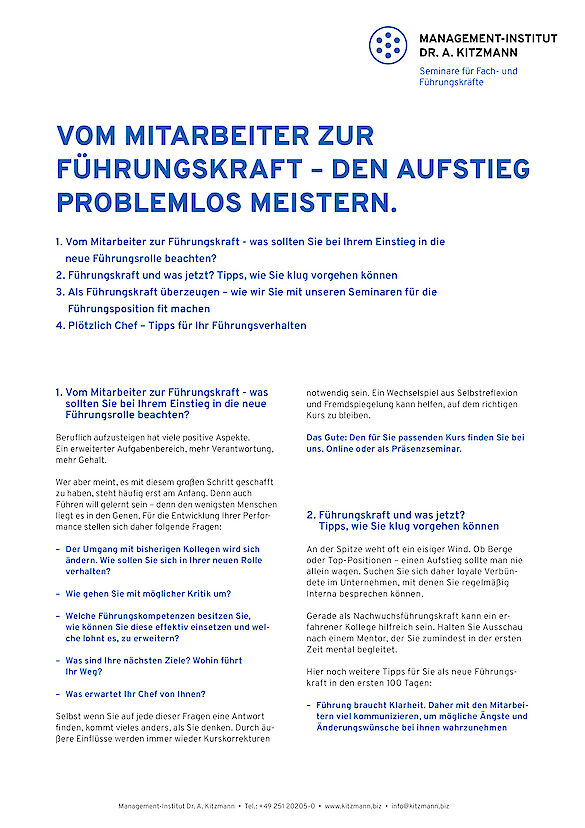
Das Whitepaper beleuchtet die zentralen Herausforderungen beim Übergang in die erste Führungsrolle. Es zeigt, welche Kompetenzen neue Führungskräfte benötigen, um Verantwortung zu übernehmen, Teams erfolgreich zu führen und eine klare Führungsrolle zu entwickeln. Dabei werden typische Stolpersteine ebenso aufgegriffen wie praxisnahe Impulse für Kommunikation, Selbstführung und den Aufbau von Vertrauen im Team. Das Whitepaper bietet damit eine fundierte Orientierung für alle, die den Schritt in die Führung bewusst und erfolgreich gestalten möchten.
Wer vom Mitarbeiter zur Führungskraft wird, braucht mehr als nur Fachwissen. Er braucht wirksame Führungsinstrumente. Dazu zählen unter anderem:
Gerade neue Führungskräfte profitieren von klaren Gesprächsleitfäden, praxisnahen Tools und einem Baukasten an Führungsinstrumenten, der im Alltag wirklich handhabbar ist.
Der Schritt vom Mitarbeiter zur Führungskraft im eigenen Team ist besonders heikel. Die gemeinsame Vergangenheit, informelle Absprachen und alte Rollenbilder stehen der neuen Führungsrolle manchmal im Weg.
Akzeptanz lässt sich aufbauen durch:
Gerade hier sind Themen wie Nahbarkeit vs. Distanz und die eigene Position in der Sandwich-Position wichtig: Man darf weder „beste Freundin/bester Freund“ bleiben noch in eine künstliche Härte verfallen.
Wer erstmals eine Führungsrolle übernimmt, lernt meist im laufenden Betrieb, daher sind Fehler normal. Einige lassen sich jedoch durch Bewusstheit gut vermeiden:
Gerade neue Führungskräfte profitieren davon, diese Muster früh zu erkennen und mit Unterstützung bewusst gegenzusteuern.
Der Rollenwechsel vom Mitarbeiter zur Führungskraft muss kein Sprung ins kalte Wasser sein. Gezielte Qualifizierungsprogramme unterstützen neue Führungskräfte dabei, ihre Rolle von Beginn an professionell zu gestalten.
Typische Inhalte solcher Programme:
Besonders hilfreich sind hier strukturierte Entwicklungsprogramme (z. B. Management-Diplom Stufe 1 für Führungskräfte), Trainings „Vom Mitarbeiter zur Führungskraft“ sowie begleitendes Coaching, in dem individuelle Fälle aus dem Führungsalltag besprochen werden können.
Zielgruppen:
Der Schritt vom Mitarbeiter zur Führungskraft ist Herausforderung und Chance zugleich. Wer den Rollenwechsel bewusst gestaltet, Führungsstil entwickelt, Akzeptanz aufbaut und die ersten 100 Tage strukturiert angeht, legt das Fundament für nachhaltige Wirksamkeit in der neuen Führungsrolle.
Mit den richtigen Führungsinstrumenten, einem klaren Erwartungsmanagement, einem reflektierten Umgang mit Sandwich-Position, Mikropolitik und dem Spannungsfeld Nahbarkeit vs. Distanz wird aus „erstmals Chef“ eine starke, anerkannte Führungspersönlichkeit: zum Gewinn für Team, Unternehmen und die eigene Karriere.

Im Business zählt die Kunst der Überzeugungskraft. Entdecken Sie 6 Schritte, um Ihre Argumentation nachhaltig zu verbessern.
Nicht jede Fach- oder Führungskraft, die Konfliktkompetenz aufbauen möchte, kann dafür zwei Tage an einen Präsenzstandort reisen. Offene Online-Seminare zu Konfliktmanagement und Gesprächsführung schließen diese Lücke, ohne bei der Praxisnähe Abstriche machen zu müssen, sofern das Format gut gemacht ist.
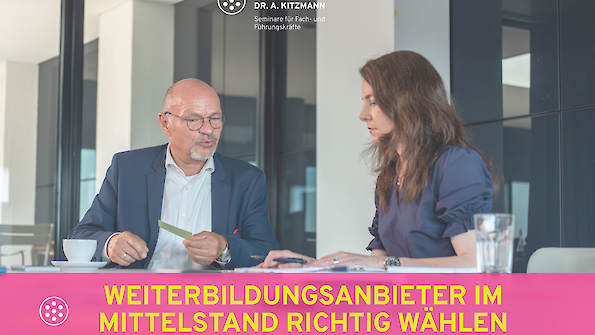
Der Markt für berufliche Weiterbildung in Deutschland ist groß und unübersichtlich. Für HR-Entscheider im Mittelstand, die selten eine eigene große Personalentwicklungsabteilung im Rücken haben, ist die Wahl des richtigen Anbieters deshalb eine Entscheidung mit spürbaren Folgen, finanziell wie inhaltlich.
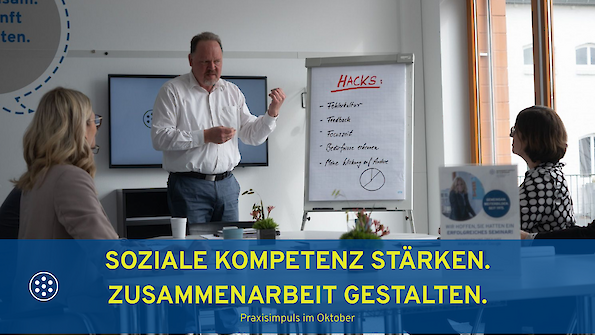
Fachwissen, Erfahrung und methodische Kompetenz sind wichtige Voraussetzungen für beruflichen Erfolg. Doch überall dort, wo Menschen zusammenarbeiten, entscheidet noch etwas anderes über die Qualität der Ergebnisse: soziale Kompetenz.
Ob im Team, im Kundenkontakt, in Projekten oder in der Führung: wer andere Perspektiven versteht, aufmerksam zuhört, klar kommuniziert und auch mit Konflikten konstruktiv umgehen kann, schafft eine wichtige Grundlage für Vertrauen und erfolgreiche Zusammenarbeit.
Gerade in einer Arbeitswelt, die von Veränderung, neuen Technologien, hybrider Zusammenarbeit und zunehmender Komplexität geprägt ist, gewinnen zwischenmenschliche Fähigkeiten weiter an Bedeutung.
Das Management-Institut Dr. A. Kitzmann begleitet Fach- und Führungskräfte seit über 50 Jahren bei ihrer persönlichen und beruflichen Weiterentwicklung. Kommunikation, Führung und soziale Kompetenz gehören dabei zu den zentralen Themen der praxisorientierten Seminare.
Fachliche Qualifikationen und berufliche Erfahrung bilden eine wichtige Grundlage für den beruflichen Erfolg. Doch insbesondere in einer zunehmend vernetzten und dynamischen Arbeitswelt gewinnen zwischenmenschliche Fähigkeiten immer stärker an Bedeutung. Unterschiedliche Persönlichkeiten, Erwartungen und Arbeitsweisen treffen täglich aufeinander. Ob die Zusammenarbeit gelingt, hängt dabei wesentlich davon ab, wie Menschen miteinander kommunizieren, Konflikte bewältigen und aufeinander eingehen.
Soziale Kompetenz ist deshalb längst keine ergänzende Fähigkeit mehr, sondern eine zentrale Voraussetzung für erfolgreiche Zusammenarbeit, wirksame Führung und langfristige berufliche Entwicklung.
Das Management-Institut Dr. A. Kitzmann unterstützt Fach- und Führungskräfte dabei, ihre kommunikativen und sozialen Fähigkeiten gezielt weiterzuentwickeln. Im Mittelpunkt stehen praxisorientierte Weiterbildung, die bewusste Reflexion des eigenen Verhaltens und die unmittelbare Übertragung neuer Kompetenzen in den beruflichen Alltag.
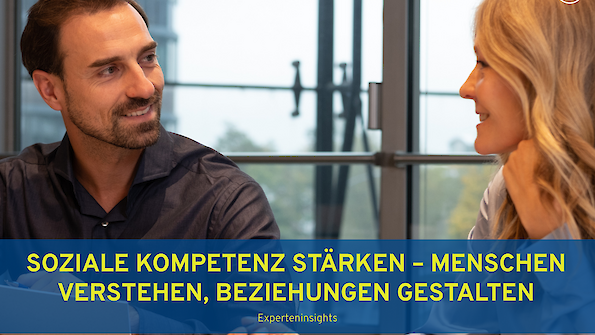
Zwischen künstlicher Intelligenz, virtuellen Meetings und hybriden Arbeitsmodellen verändert sich nicht nur, wie wir arbeiten, sondern auch, wie wir miteinander kommunizieren. Während digitale Technologien immer mehr Aufgaben übernehmen, rücken menschliche Fähigkeiten wie Empathie, Selbstreflexion und Vertrauen stärker in den Fokus.
Doch welche sozialen Kompetenzen sind heute besonders gefragt? Und wie können Führungskräfte und Mitarbeitende diese gezielt weiterentwickeln?

Die Beförderung zur Führungskraft bringt neue Verantwortung, aber auch Unsicherheit mit sich. Wie führe ich Mitarbeitergespräche? Wie entwickle ich meinen eigenen Führungsstil? Wie kommuniziere ich klar und motivierend? Diese Fragen beschäftigen nicht nur neue Führungskräfte selbst, sondern auch HR-Verantwortliche, die den Grundstein für nachhaltige Führungskompetenz legen möchten.
Ein Führungskräfteseminar kann hier entscheidend unterstützen. Doch bei der Vielzahl an Angeboten fällt die Auswahl schwer. Dieser Leitfaden zeigt Ihnen, worauf Sie bei der Auswahl von Führungskräfteseminaren für 2026 achten sollten, welche Formate es gibt und welche Kriterien wirklich über den Lernerfolg entscheiden.

Die Anforderungen an Führungskräfte im Mittelstand wachsen stetig. Hybride Arbeitsmodelle, der Einsatz von KI und die Erwartungen jüngerer Generationen verändern, was gute Führung ausmacht. Gleichzeitig zeigen aktuelle Erhebungen, dass viele mittelständische Unternehmen noch keine strukturierten Programme zur Führungskräfteentwicklung etabliert haben.
Dieser Leitfaden zeigt Ihnen, wie Sie ein Inhouse-Programm für Führungskräfteentwicklungim Mittelstand aufbauen, welche Auswahlkriterien für Trainingsanbieter entscheidend sind und welche Erfolgsfaktoren den langfristigen Nutzen Ihrer Investition sichern.

Der Sprung vom Kollegen zur Führungskraft gelingt selten allein durch Erfahrung. Gerade im Mittelstand, wo neue Führungspositionen oft aus den eigenen Reihen besetzt werden, fehlt häufig die Zeit für eine strukturierte Vorbereitung. Coaching und maßgeschneiderte Inhouse-Seminare schließen genau diese Lücke.